Research led by Instituto Juruá in the Médio Juruá Territory investigates whether the management of oilseeds can reconcile income generation and forest conservation.
Por: Neyde do Carmo
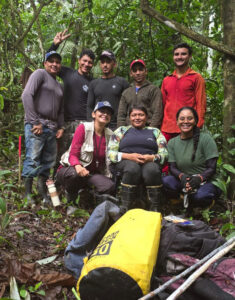
Between October 9 and November 18, the Juruá River once again became a road, a laboratory, and a classroom. In a new field excursion, technical teams and local community members traveled through riverside communities of the Médio Juruá Territory to continue the ecological monitoring of oilseed supply chains, a silent, patient, and strategic work that has now been ongoing for three years.
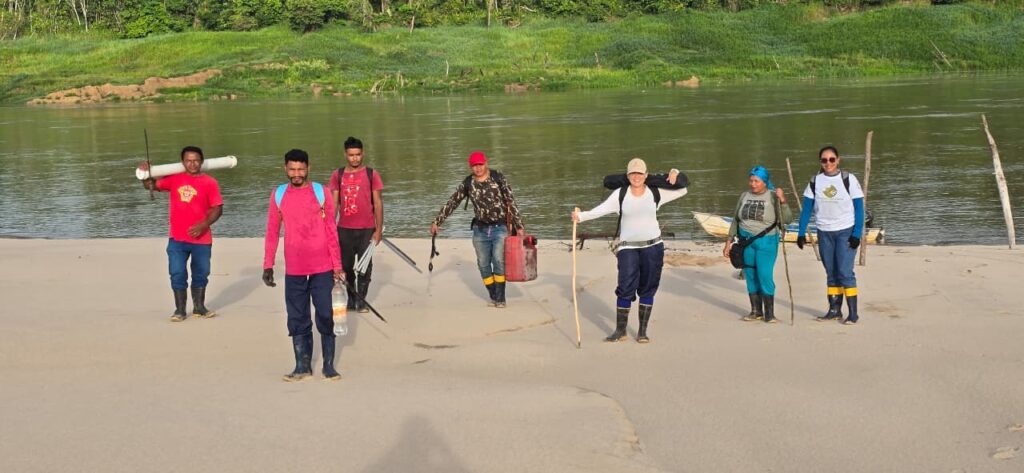 Team assigned for the final field trip.
Photo: Neyde do Carmo / Instituto Juruá Collection.
Along the route, which connects communities located inside and outside the Uacari Sustainable Development Reserve (RDS) and the Médio Juruá Extractive Reserve (RESEX), the group visited 10 communities participating in the project. In each of them, four permanent areas are systematically monitored: two oilseed-harvesting areas and two non-harvesting areas, allowing a comparison of how the forest responds to sustainable use.
Each plot (0.5 ha) is marked as a continuous observation territory. There, every tree tells a story. All individuals (adults, juveniles, and seedlings) of andiroba, murumuru, ucuúba, and açaí are monitored. Using measuring tape, tape measures, and field notebooks, the height, diameter, mortality, and recruitment of the species are recorded. Year after year, the data reveal patterns of growth, regeneration, and resilience.
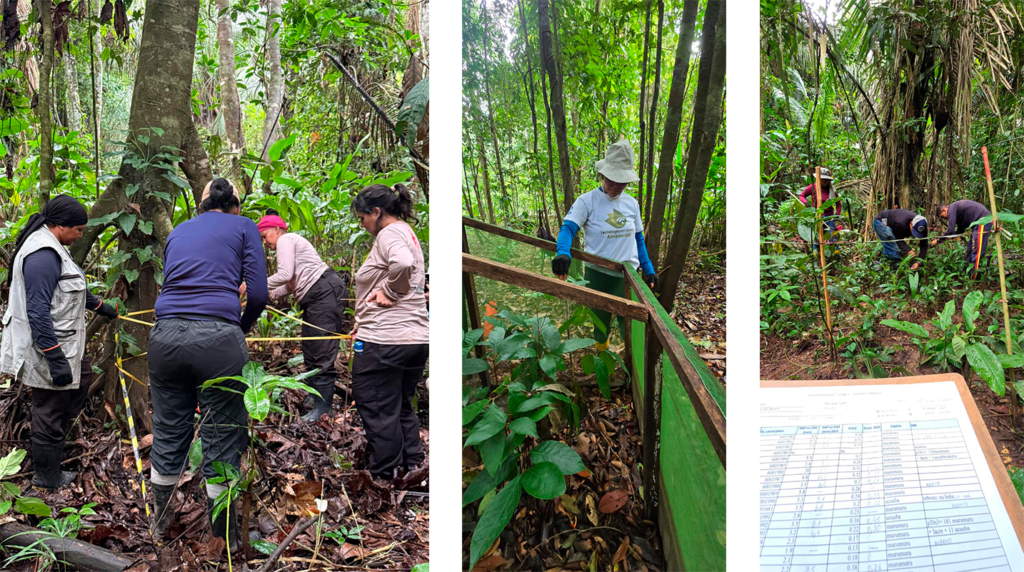 Work on demarcation, inventory, and monitoring of forest individuals.
Photo: Neyde do Carmo / Instituto Juruá Collection.
The work now includes 40 monitored forest inventory plots, forming a robust database on the ecological dynamics of the species that support local production chains. More than just measuring trees, the project seeks to answer a central question: is it possible to produce and conserve at the same time? The comparison between harvesting and non-harvesting areas helps build this answer on a scientific basis.
In recent cycles, a new species has been added to the monitoring: açaí (Euterpe precatoria), whose economic importance has been growing in the territory. Its inclusion reflects the transformation of the regional production reality and strengthens the monitoring of a supply chain that is increasingly gaining prominence among the communities.
The monitoring, carried out for three consecutive years, is beginning to form a historical series essential for more consistent analyses. The expectation is that the monitoring will continue for at least two more years, expanding understanding of the management impacts and ensuring increasingly evidence-based decisions.
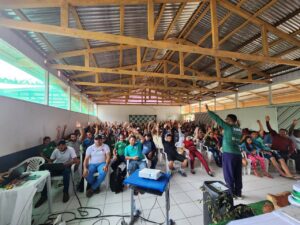
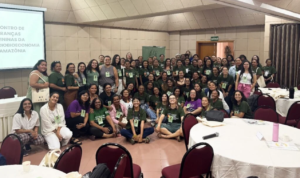
The data and lessons learned gained new spaces for dialogue just a few months later. Between January 27 and 29, 2026, during the III Meeting of Oilseed Production Chains of the Médio Juruá, promoted by AMARU, CODAEMJ, Memorial Chico Mendes, and partners at the Uacari Sustainable Development Reserve, this research project was presented by Instituto Juruá collaborators to producers, technicians, and regional partners. The sharing of data strengthened the dialogue between science and community practice, reaffirming that ecological monitoring is a strategic part of the governance of production chains and the development of evidence-based decision-making in the territory.
In the Médio Juruá, fieldwork is also an exercise in partnership. Collectors accompany the measurements, identify the species, share knowledge, and help interpret the signals of the forest. Between technical notes and conversations in the shade of the trees, a model is built in which traditional knowledge and scientific research go hand in hand.
At the end of each expedition, what remains is not just an updated spreadsheet, but the certainty that the forest remains alive and that its future depends on the balance between responsible use and ongoing care.