The initiative supports one of IJ’s core objectives for the conservation of the entire Juruá River basin
By: Eduardo Muhlen and Neyde do Carmo, reviewed by Nathália Messina
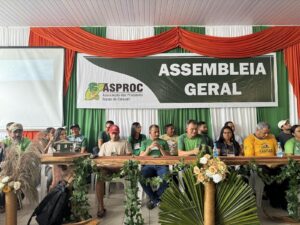
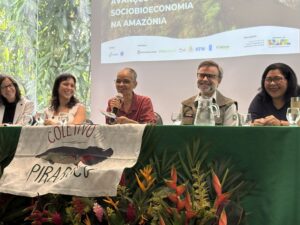
Entre 20 de novembro e 10 de dezembro de 2025, a equipe de Governança Territorial e Sociobioeconomia do Instituto Juruá percorreu os municípios de Ipixuna e Guajará, no Amazonas, com o objetivo de fortalecer as relações e as bases para a construção de acordos de pesca comunitários em cada município, visando a ampliação do ordenamento pesqueiro na calha do Juruá, que é um objetivo central do Instituto. Nesta ocasião, pudemos explicar como funciona esse modelo de cogestão territorial e avaliar, de forma técnica e participativa, as condições para o manejo sustentável do pirarucu (Arapaima gigas) nos territórios.
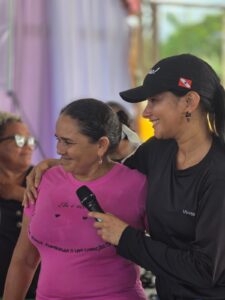
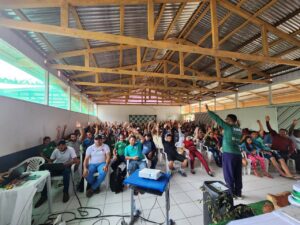
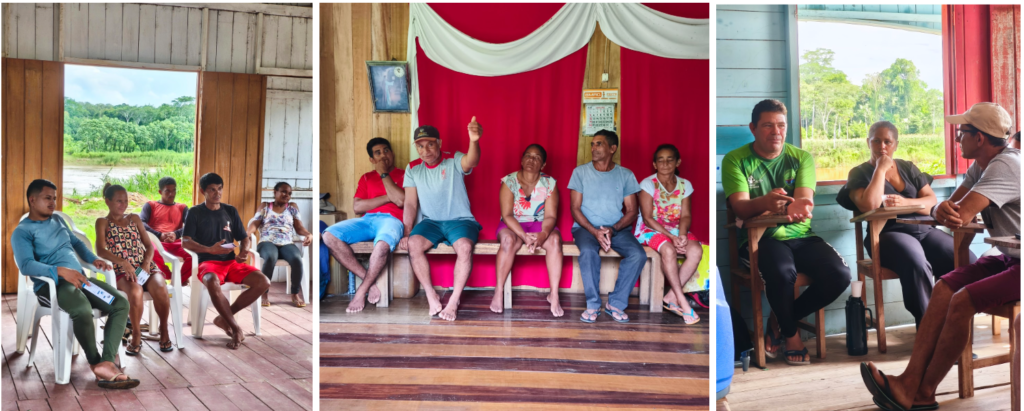
Durante os vinte dias de campo, a equipe visitou e realizou atividades em 13 comunidades ribeirinhas, sendo 6 em Ipixuna e 7 em Guajará, sendo estas últimas em parceria com o Instituto Fronteiras – com sede em Cruzeiro do Sul, Acre. Em cada parada, foram realizadas reuniões abertas com pescadores e pescadoras para esclarecimento sobre pesca, ordenamento pesqueiro, organização comunitária e manejo de recursos, além de levantamentos sobre o número de famílias pescadoras, mapeamento dos principais ambientes de pesca e registro de conflitos territoriais. Mais do que visitas técnicas, esses encontros foram espaços de escuta: a pesca foi discutida não apenas como fonte de renda, mas como eixo central da vida das comunidades.
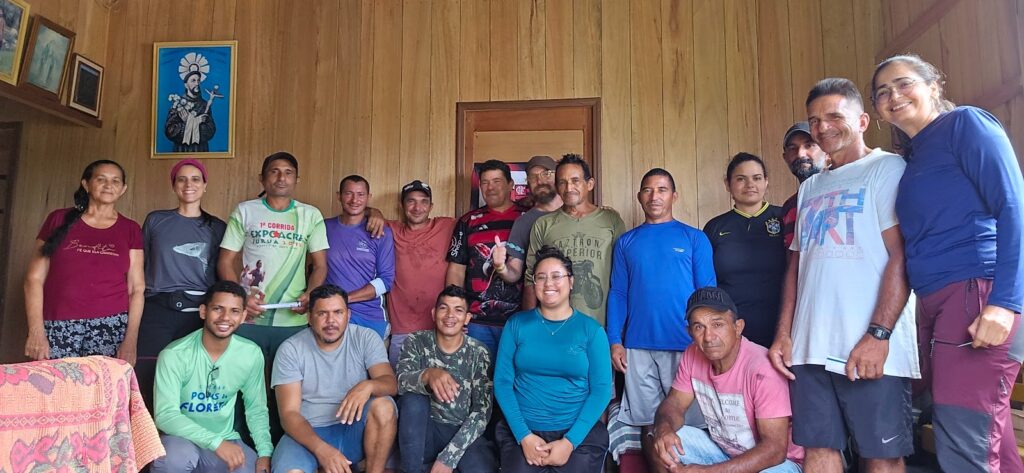
Photo: Neyde do Carmo
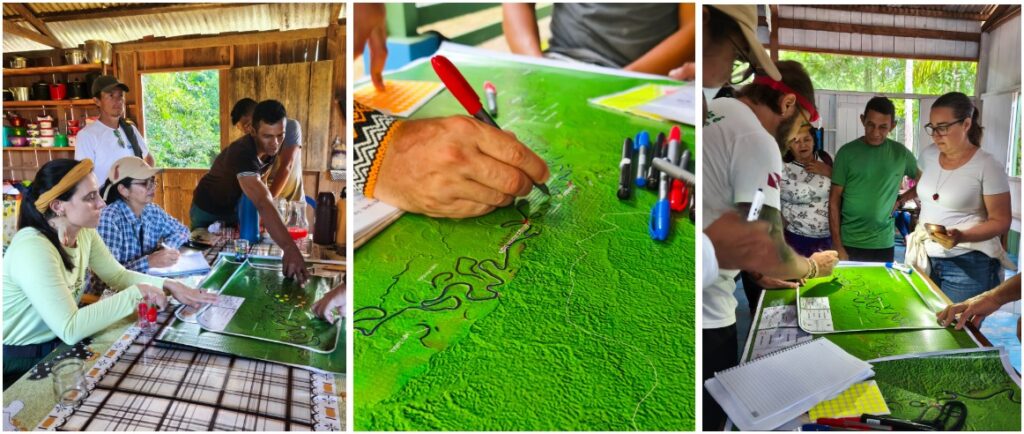
Maps in the hands of fishers
One of the central moments of the expedition was the participatory zoning of the lakes. With printed maps as a tool for dialogue, residents collectively identified commercial fishing areas, subsistence sites, areas under pressure, and lakes with preservation potential. On paper, the lakes gained names, history, boundaries, and dreams. And in the end, the communities were able to leave each meeting with a clearer vision of their territory and the need to build shared rules.
Photos: Nathália Messina.
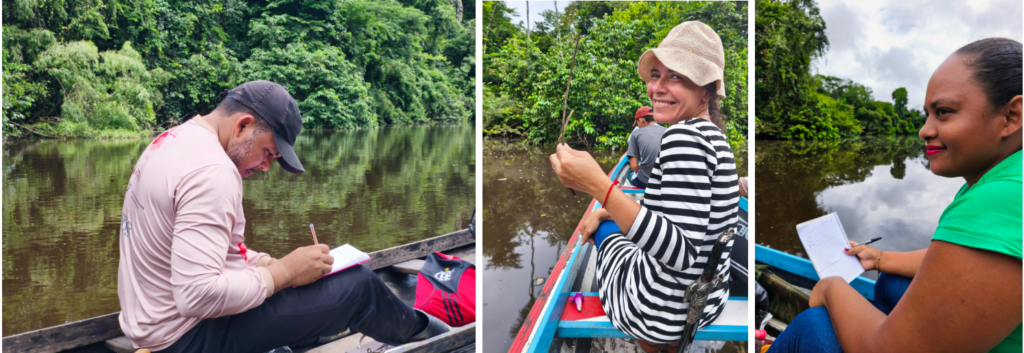
Pirarucu counting: data that come from the forest
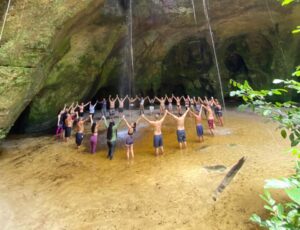
Counts for a preliminary assessment of pirarucu populations were carried out in the lakes of the Céu dos Estorrões community, in Ipixuna, a territory that already presents organizational maturity and favorable conditions for the zoning and surveillance required for the management of the species. The activity generated the first data on the productive potential of the area, confirming the feasibility of a future management initiative. Starting with communities with more consolidated organization and governance is no coincidence: it is a strategy. These territories function as a reference and provide security for other communities and for future expansions of management.
Photos: Nathália Messina.
Dialogue with fishing organizations
After the activities in the communities, the team also met with the Fishers’ Colony Z-43 and the Fishers’ Union of Guajará, both interested in supporting the construction of the Fishing Agreement in the region. This type of coordination is essential: participatory management is only sustained when it involves local organizations, community leaders, and institutional partners working together.
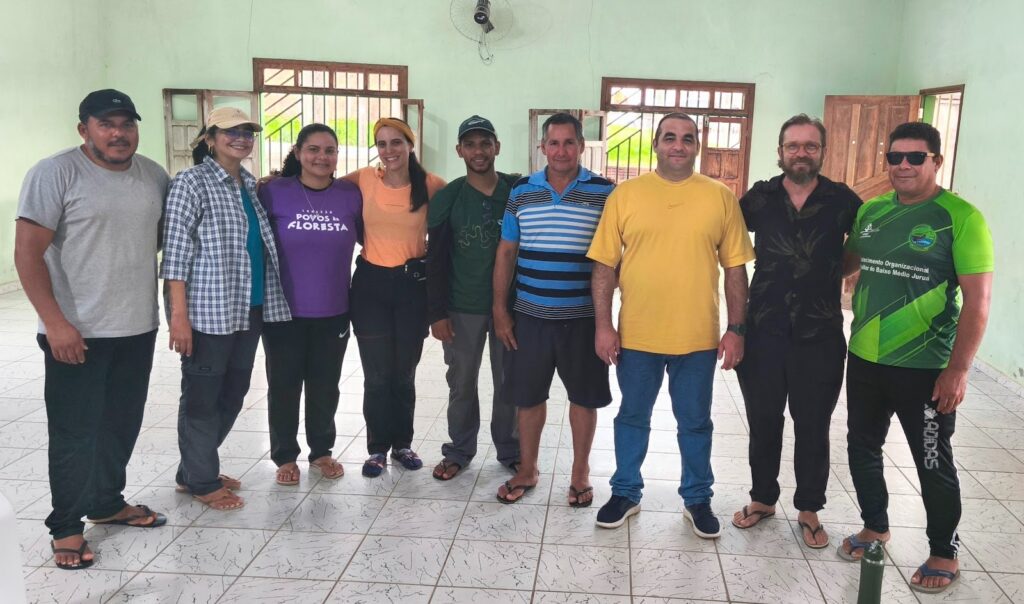
Photo: Nathália Messina.
What the expedition revealed
The territory presents real environmental potential for the recovery and sustainable use of pirarucu, especially in lakes with characteristics that facilitate community monitoring. At the same time, the expedition revealed challenges that need to be addressed: territorial conflicts, records of invasions, weak enforcement in some areas, and a low number of formally registered fishers. These issues are part of the reality in many Amazonian territories and make it clear that management goes far beyond technical aspects, also involving legal, institutional, and organizational issues..
A movement, not just a diagnosis
More than mapping the territory, the expedition mobilized people. In each community visited, it was reaffirmed that participatory management is a strategy for territorial empowerment, strengthening local autonomy, food security, and improving the quality of life of those involved.
Photos: Nathália Messina
At the end of the journey, what remains is the certainty that there is a social base and a real willingness to move forward. Ipixuna and Guajará demonstrate concrete conditions to structure a gradual process of participatory management: starting with the areas with greater organization and expanding as institutional strengthening advances.
The continuity of coordination efforts, permanent technical support, and the consolidation of partnerships are the ingredients capable of transforming this potential into territorial policy in practice, bringing together environmental conservation, sustainable income, and food security for the traditional communities of the Juruá.
.