Launched in Manaus, the Payment for Environmental Services Program for Pirarucu begins to financially reward communities that protect lakes, biodiversity, and entire territories through sustainable management
By Indiara Bessa
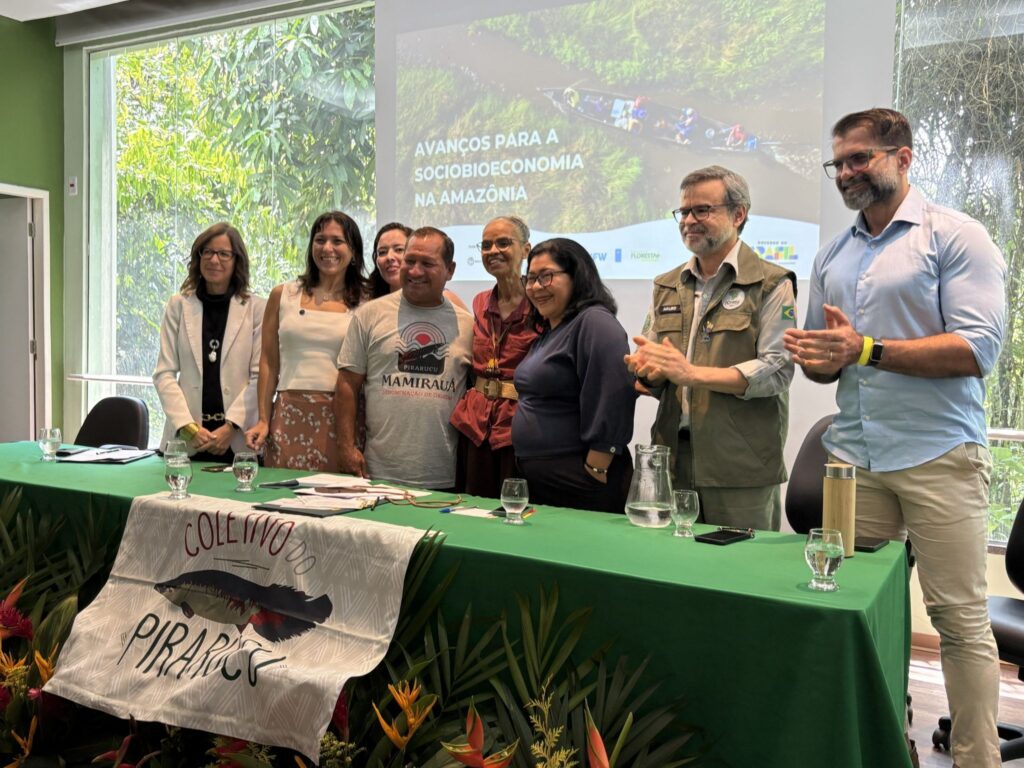
The launch of the Payment for Environmental Services Program for Pirarucu (PSA Pirarucu), held in Manaus on March 26, represents a milestone for fishery managers who, for decades, have supported one of the most successful community-based conservation models in the Amazon. The initiative, led by the Ministry of the Environment and Climate Change (MMA), in partnership with the Ministry of Agrarian Development and Family Agriculture (MDA) and implemented with the National Supply Company (Conab), provides financial recognition for environmental services delivered by communities engaged in sustainable pirarucu management in areas authorized by Ibama.
In the Juruá River region, where community-based management has become a strategy for conservation, income generation and territorial strengthening, the creation of the program is received as recognition of long-standing work. For João Campos-Silva, this policy marks a new stage for communities that protect lakes and forests without ever having been compensated for their efforts in monitoring and safeguarding the territory.
“The launch of this environmental service payment policy is one of the most important milestones for pirarucu management, because at this moment we have more than 5,000 fishery managers protecting around 15 million hectares of Amazon rainforest. They carry out this protection and receive nothing for it. So this policy comes to recognize, value, and financially compensate these people who are dedicating their lives to protecting these forests.”
Campos-Silva also highlights that the program emerges from a process closely connected to the realities of the territories.
“For us at Instituto Juruá , it is a matter of great celebration to see this policy being developed, to see this policy being launched, because this policy carries the scent of the earth, it was built, of course, with technical knowledge, but above all, it was built by the hands of the fishery managers. So, for us, it is a source of great pride and gratification to see this path of recognition of this remarkable work that Indigenous and riverine communities carry out in protecting the forests, because no one knows better how to protect the forest than the people who live in it.”
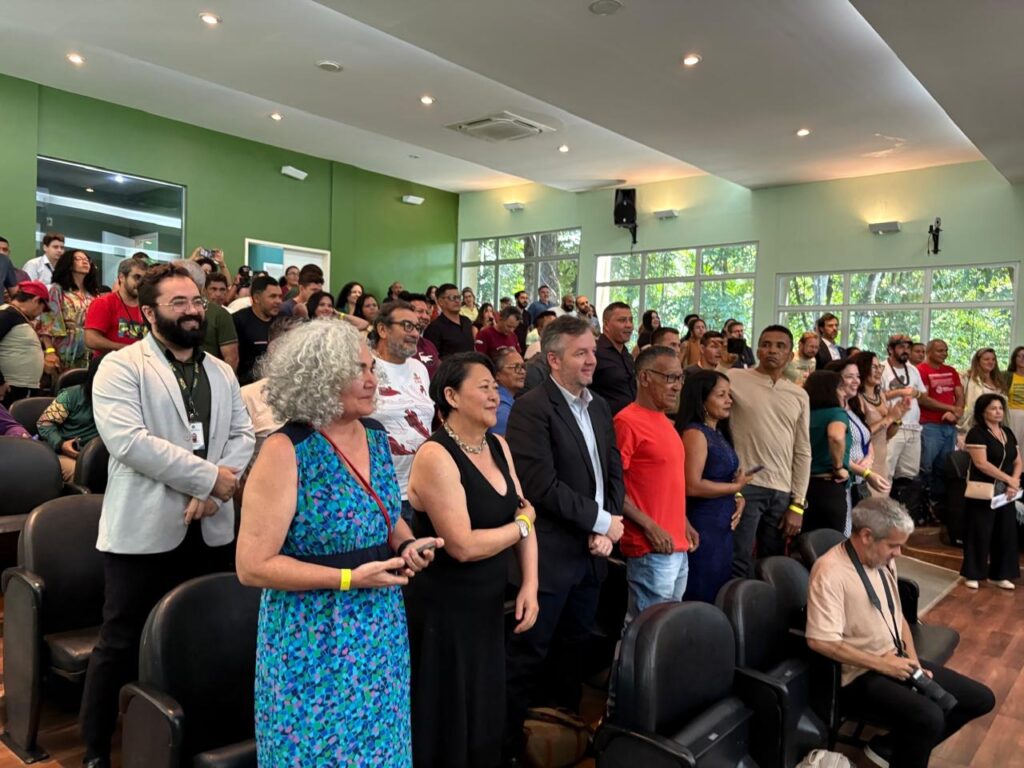
Established by MMA/MDA Ordinance No. 1.645, of March 25, 2026, the PSA Pirarucu was initially structured as a pilot project and is expected to mobilize around R$ 15 million over two years, with resources from the Floresta+ Amazônia Project, funded by the Green Climate Fund and implemented with support from UNDP. According to the federal government, the initiative is expected to benefit approximately 5,000 people, represented by more than 40 community organizations operating across 41 Indigenous Lands and Protected Areas in Amazonas, contributing to the conservation of more than 20 million hectares.
In the case of the Juruá region, the reach of the policy is especially symbolic. Data released by ICMBio indicate that around 1,300 program beneficiaries live in six federal protected areas covered by the initiative, including the Extractive Reserves of Médio Juruá and Baixo Juruá.
For fishery manager José Morais, from the Juruá River, the program responds to a long-standing demand from those who experience fisheries management on a daily basis and understand that protecting the pirarucu also means protecting an entire territory.
“It is a source of joy for all of us fishery managers in the state of Amazonas because we know that the PSA will further strengthen the value of the pirarucu production chain, which is a managed fishery. But when we talk about pirarucu, in my view, it is the banner that represents the conservation of an entire system, you are not only protecting an open-water area or an aquatic environment, you are protecting an entire territory, ensuring the conservation of both fauna and flora.”
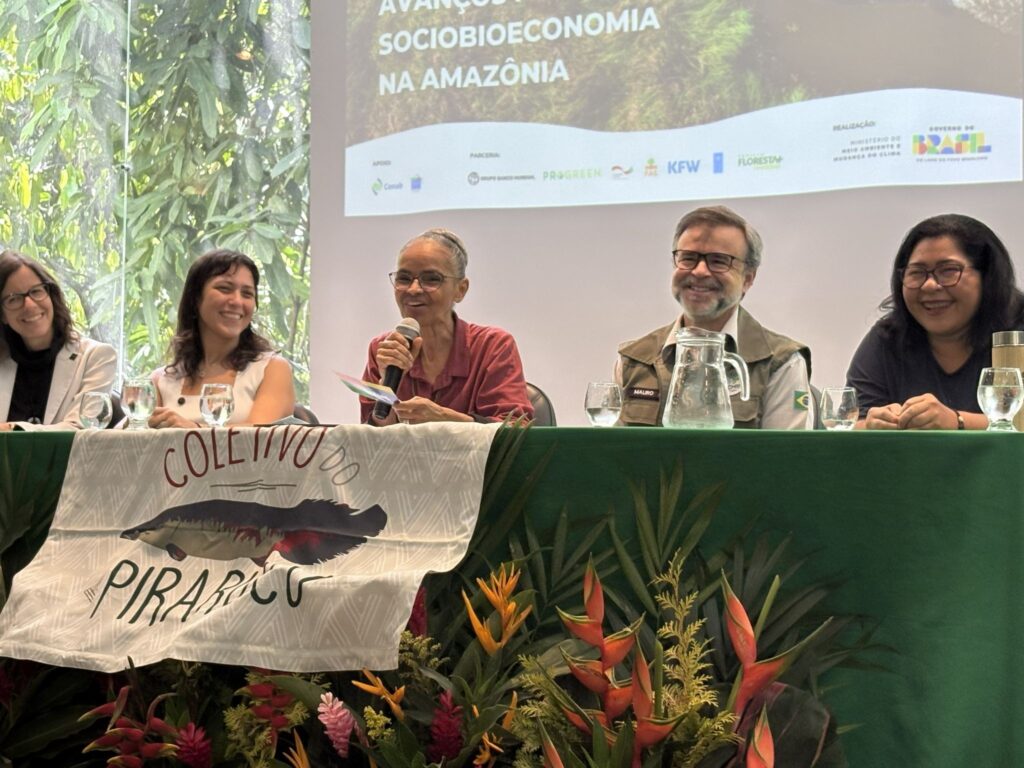
He emphasizes that the recognition can have concrete effects on families’ lives and on the continuity of this conservation model.
“It is very welcome. It is a work that we have been carrying out for years and we have been awaiting this complement and recognition of our fishery, so it will significantly improve people’s quality of life.”
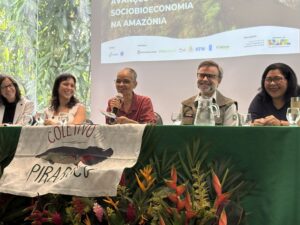
The National Secretary for Bioeconomy of the MMA, Carina Pimenta, reinforced at the launch in Manaus that the program was designed to respond to the realities of the territories and to recognize two dimensions of the fishery managers’ work: sustainable production and biodiversity protection.
“It is very important that we have addressed the expectations of not only remunerating the environmental service through fish production, but also recognizing the service you provide to all of us in protecting the lakes and the biodiversity of those ecosystems.”
According to official information from the MMA, the program provides for a public call, in partnership with Conab, to enable community organizations involved in sustainable pirarucu management in Amazonas. The objective is to register and accredit associations and cooperatives for voluntary participation in the PSA, with a view to payments for environmental services provided in 2025. Implementation will be based on information already reported to Ibama under the management authorization framework.
In addition to remunerating fishery managers, the PSA Pirarucu is part of a broader agenda to strengthen the Amazonian socio-bioeconomy. The program is part of the implementation strategy of the National Bioeconomy Development Plan (PNDBio) and the Prospera Socio-bioeconomy Program, both aimed at valuing the role of Indigenous peoples and traditional communities in biodiversity conservation and sustainable use.
FROM RESEARCH TO PUBLIC POLICY
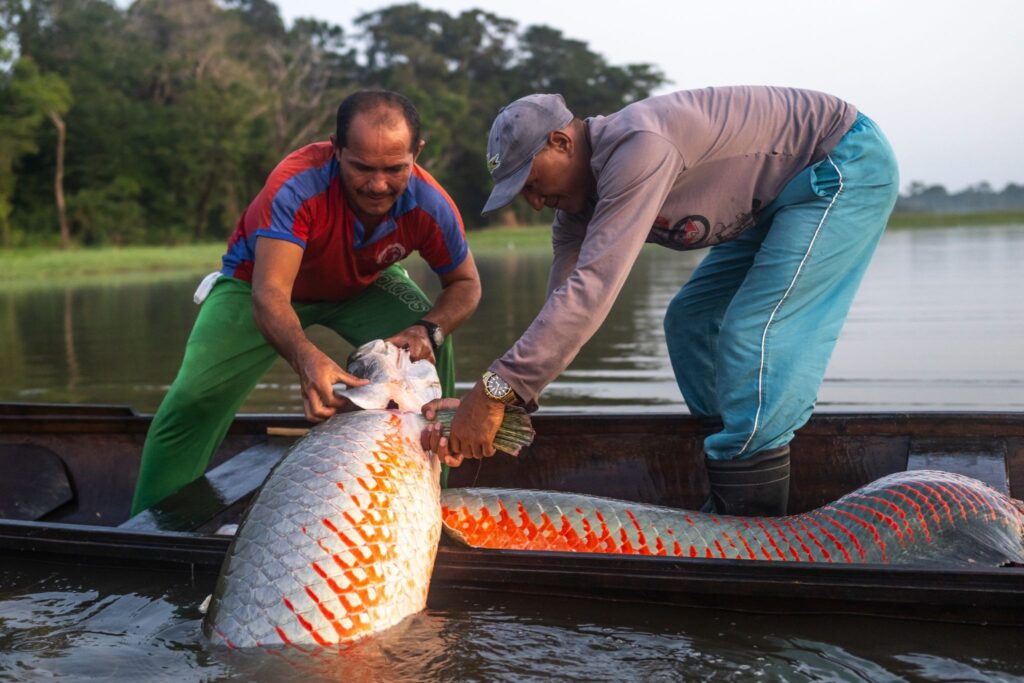
The importance of this policy becomes even more evident in light of the evidence produced within the Juruá territory itself. A study supported by , summarized in the document “Community Management Expands the Protection Area of Ecosystems in Amazonian Forests,” shows that community-based management protects far more than the directly managed lakes. By analyzing 96 lakes protected along the Juruá River, the research found that protection carried out by communities extends to adjacent flooded forests and upland areas, dramatically expanding the effectively conserved area. When direct and incidental protection zones are combined, each community protected, on average, a floodplain and forest area nearly 86 times larger than the area of the lakes during the dry season. In the state of Amazonas, this mechanism has resulted in approximately 15 million hectares of protected forest.
The study, published in Nature Sustainability, reinforces a central point in the debate on public policies in the Amazon: local communities not only manage fisheries sustainably, but also maintain, through daily work and often self-funded efforts, an extensive network of territorial protection with benefits for biodiversity, climate regulation and food security.
In this context, the Pirarucu PSA emerges as an instrument of socio-environmental justice. By economically recognizing the work of those who monitor lakes, track fish stocks, organize management and protect associated ecosystems, the policy advances the alignment between conservation, income generation and the valorization of Amazonian ways of life.
For Instituto Juruá , the program reaffirms what the communities of the Juruá River have long demonstrated in practice: conserving forests and aquatic environments through community leadership is not only possible, it is one of the most effective ways to protect the Amazon.